Register Now: SunSpec Connect – 6 part Webinar Series – Last Session Dec 16
Join us on December 16 for the SunSpec Annual Member Meeting, a three-hour interactive session that also marks the final installment of the SunSpec Connect Webinar Series. This capstone event brings together our leadership team, members, and partners to reflect on the progress made this year and to chart the course for 2026.
Executive Director Dylan Tansy will open with a forward-looking overview of SunSpec’s organizational health, a recap of the 2025 webinar series, and perspective on how our collective work positions the Alliance for the year ahead. Vice Presidents Erin Mahan and Sam Reid will provide updates spanning membership trends, international and regulatory developments, 2025 webinar performance, engagement metrics, and expanded opportunities for member involvement.
Attendees will also see demonstrations of key SunSpec software tools, hear an update on EV and bidirectional charging initiatives, and learn about emerging work streams such as the proposed ISO 15118 profile effort within the SunSpec 2030.5 CSIP V2G AC group.
This meeting is open to everyone! To encourage connection and collaboration across the ecosystem, the meeting includes structured networking opportunities through breakout discussions, interactive polls, and group reflections designed to surface insights on how members are applying SunSpec standards and where new gaps or needs are emerging.
This annual gathering serves as both a celebration of this year’s accomplishments and a strategic launch point for the road to 2026. We look forward to having you with us.
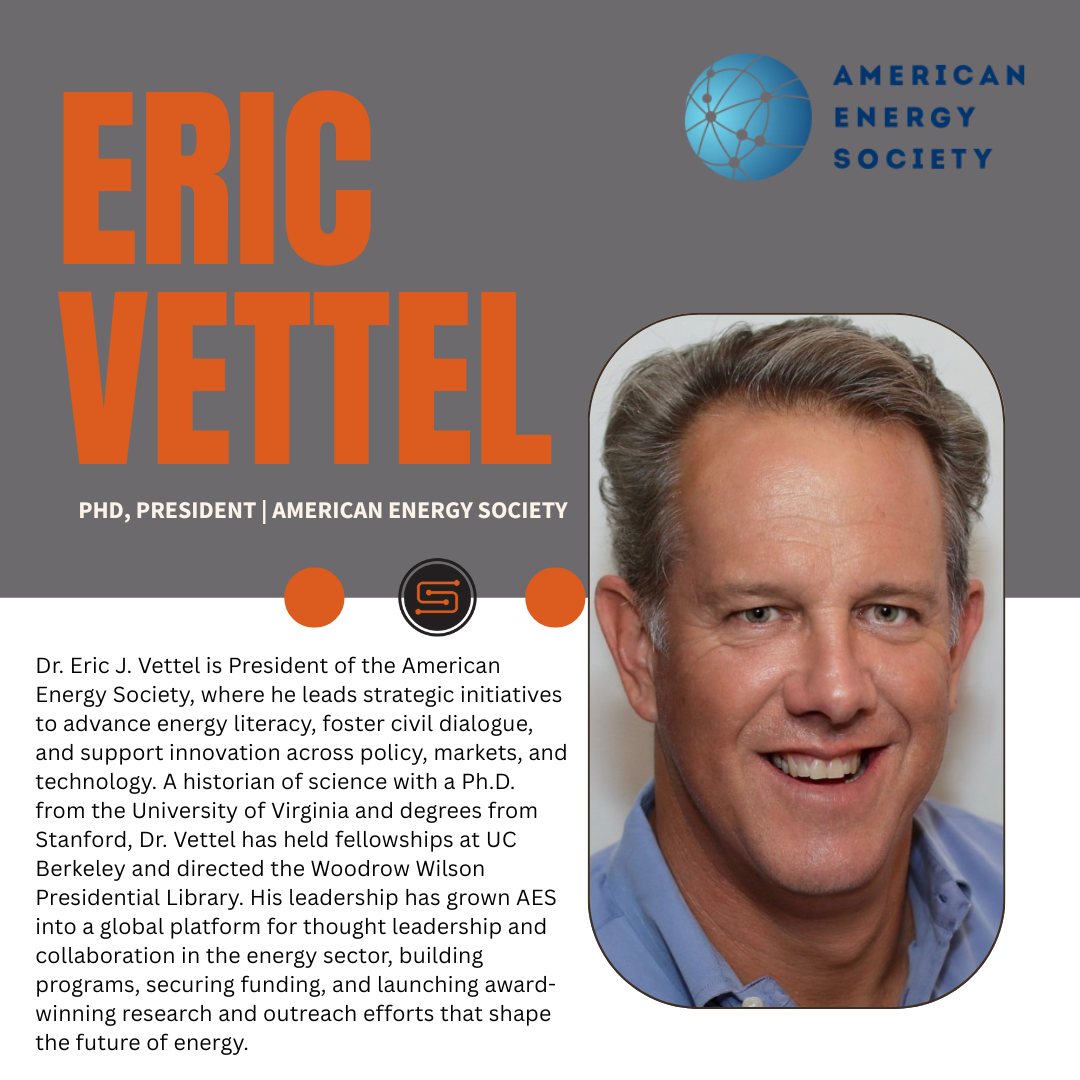
Title: Power, Policy, and Progress: Understanding the Next Phase of the Energy Transition
Abstract: The energy transition is an exceptional kind of revolution. But its origins, sources, force, and momentum appear strangely unaccountable. Understanding this history—where we are and how we got here—reveals everything about where we are and where we are going.
Drawing from his forthcoming book, Dr. Vettel will trace the historical arc from the post-9/11 push for energy independence to today's growing need for digital, decentralized, and standardized energy infrastructure. Through historical insight, he will outline how the energy sector should interpret future regulatory trends, geopolitical developments, and market dynamics.
This session is designed to equip participants with the historical context needed to navigate and lead through the energy transition.
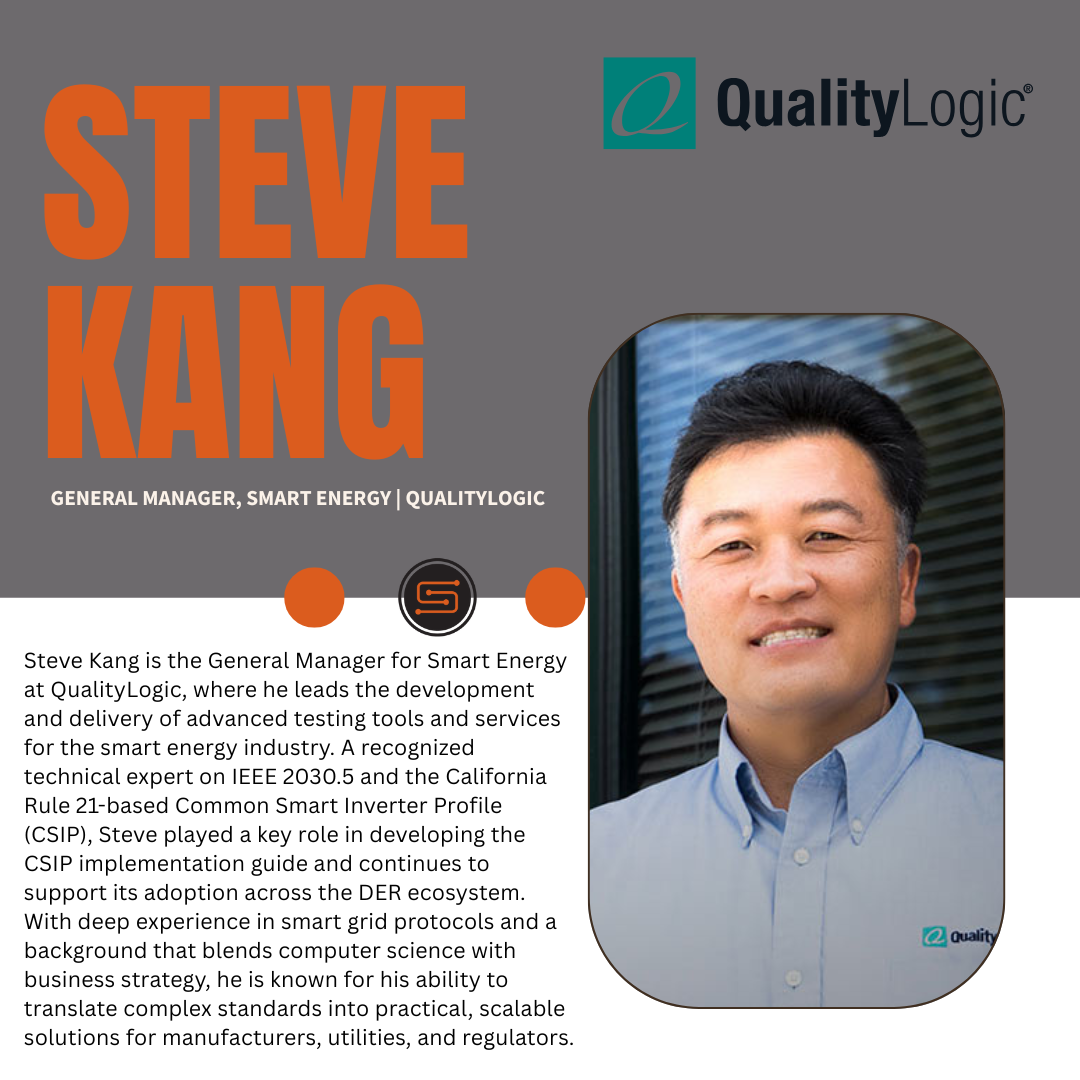
Title: The Road Ahead for IEEE 2030.5: Lessons Learned and What Comes Next
Abstract: As distributed energy resources (DERs) expand across the grid, interoperability standards like IEEE 2030.5 have become critical to ensuring secure, reliable communication between utilities and DER assets. In this session, Steve Kang of QualityLogic will explore where 2030.5 stands today and where it needs to go next. Drawing on real-world testing insights, stakeholder feedback, and QualityLogic’s deep involvement in the evolution of interoperability frameworks, this talk will provide both a retrospective and a forward-looking perspective. Attendees will gain clarity on how 2030.5 is performing in the field, what gaps remain, and how emerging regulatory landscapes may shape the future of DER communications. With 2026 compliance deadlines on the horizon and momentum building around grid modernization, this session offers a timely assessment of how IEEE 2030.5 can continue to adapt and lead in a changing energy ecosystem.
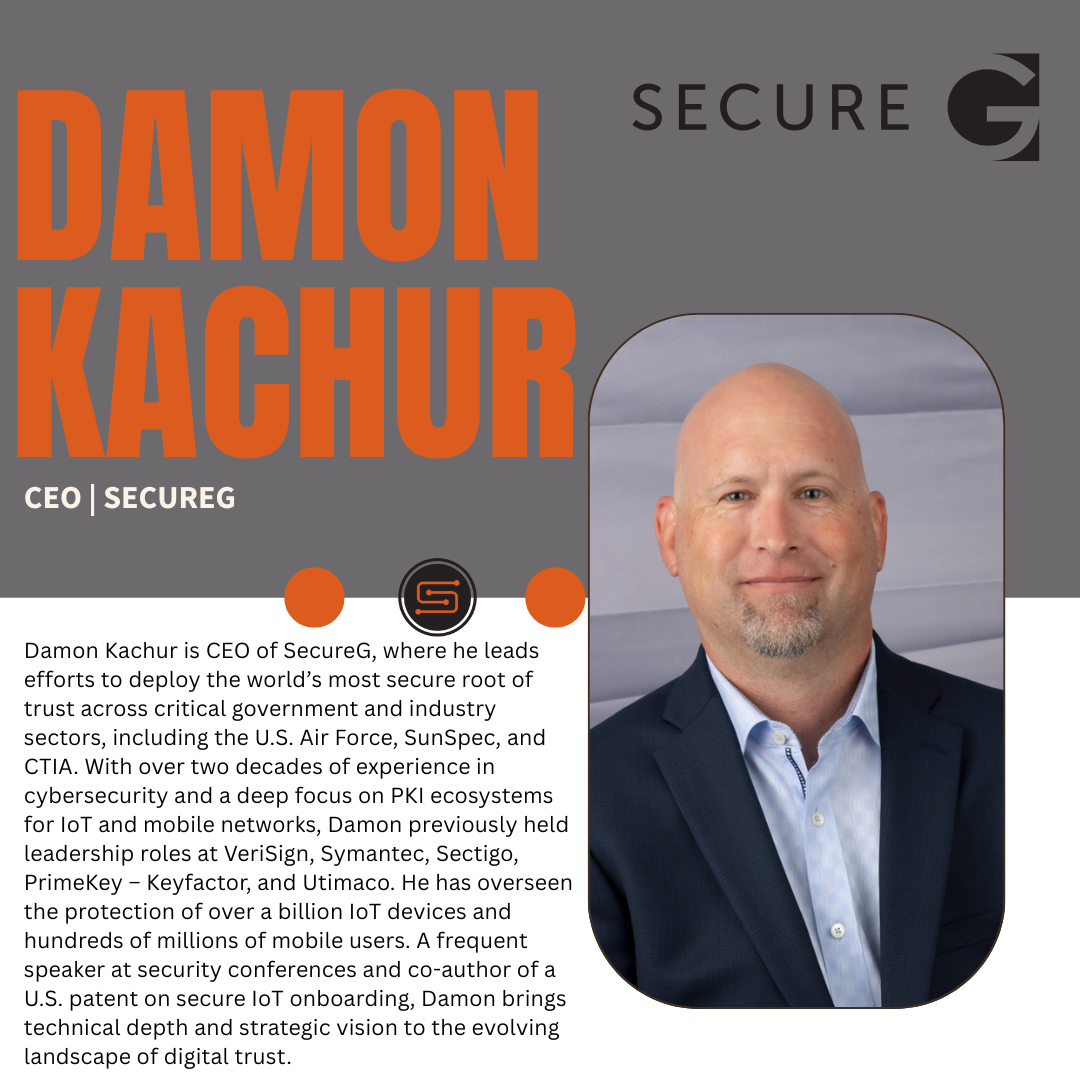
Title: Preparing for the Quantum Migration: Securing DER Systems in a Post-Quantum World
Abstract: The rise of quantum computing presents a fundamental challenge to today's public key infrastructure (PKI), with major implications for digital certificates, encrypted communication, and trust models across the energy sector. In this forward-facing session, Damon Kachur will introduce the concept of quantum migration and outline the strategic steps needed to secure distributed energy resources (DERs) against quantum threats. Drawing on real-world implementation experience, the presentation will cover cryptographic inventory analysis, quantum-safe certificate planning, and the evolution of PKI hierarchies for protocols like Modbus. Participants will gain practical guidance on how to prepare systems for a post-quantum future while ensuring compatibility, resilience, and long-term integrity in DER communications.
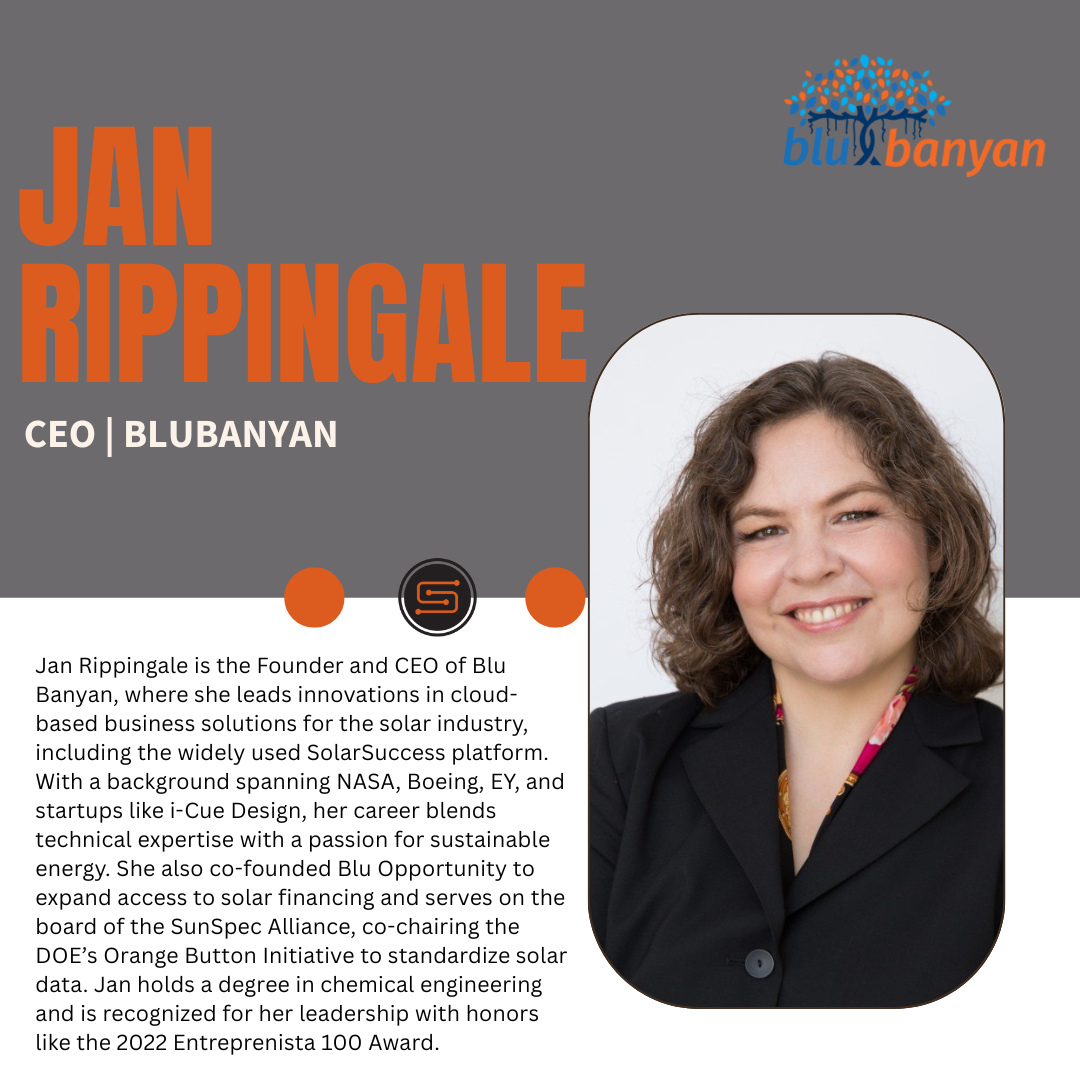
Title: Standardizing Solar Finance: Unlocking the Value of Data Through Orange Button
Abstract: In a rapidly evolving solar and DER market, consistent and accessible data is critical to streamlining financing, operations, and long-term asset performance. In this session, Jan Rippingale will spotlight the latest advancements in the Orange Button initiative, with a focus on product registry improvements and new work around time series datasets—including electrical output and weather data. Attendees will gain insight into how standardizing the format and structure of site-level data can enhance solar site valuation, improve O&M decision-making, and build investor confidence. Drawing on recent cross-industry collaboration and Jan’s hands-on work in the Orange Button ecosystem, this session offers a practical roadmap to how structured data can accelerate capital deployment and scale clean energy growth.

Title: Inside the SunSpec DevKit: Building the Future of Open-Source Solar Tools
Abstract: The distributed energy landscape is increasingly software-defined, and open-source innovation is playing a key role in shaping how DER systems are built, tested, and deployed. In this session, Vish Ganti will walk attendees through several cutting-edge projects from the SunSpec open-source program, including the new Modbus TCP stack with TLS support and an early-stage SunSpec DevKit designed to simplify developer workflows. The presentation will also explore how the DevKit could integrate automated data collection from public sources like the CEC database, using AI-driven web scraping and metadata translation tools. With a clear focus on usability and collaboration, this session will offer developers, integrators, and platform architects a first look at the tools driving the next generation of grid-interactive technologies.
Webinar Recap: Beyond RE+ — Key Trends Shaping the Future of DER and Solar
On October 2nd, SunSpec Alliance opened its new SunSpec Connect Webinar Series with a session titled Beyond RE+: Key Trends Shaping the Future of DER and Solar. Moderated by Dylan Tansy (Executive Director, SunSpec Alliance), Erin Mahan (VP Membership & Regulatory Affairs, SunSpec Alliance), and Tom Tansy (CEO, DER Security Corp), the event highlighted key takeaways from RE+ 2025 and mapped out the most pressing opportunities and challenges in the solar and DER ecosystem.
Market Mood: Optimism Amid Transition
The opening theme was clear: industry optimism is strong, even as traditional federal incentives begin to phase out. Load growth from electric vehicles, building electrification, and the rapid rise of AI-driven data centers is driving unprecedented energy demand. These factors are fueling confidence that distributed resources and storage will continue to grow, with DERs positioned as essential to meeting both near-term and long-term grid needs.
Standards and Interoperability
Adoption of SunSpec Modbus has become mainstream, with the vast majority of device manufacturers using it to meet IEEE 1547 requirements and UL 1741 SB certification. However, interoperability remains inconsistent. Many devices have met only the minimum certification criteria without undergoing deeper protocol validation, leaving system integrators with costly customization work.
SunSpec is tackling this gap by expanding certification programs, publishing new test procedures, providing training through SunSpec Academy, and continuing to work with a global network of authorized test labs. These steps are designed to ensure true interoperability across devices and systems—an essential foundation for large-scale DER integration.
Utilities Move from Pilots to Portfolios
For years, utilities have delayed large-scale use of IEEE 2030.5 interfaces in the field. That shift is finally happening. Beginning in 2026, utilities in California and beyond are expected to move from pilot programs to portfolio-level deployments, using IEEE 2030.5-based Common Smart Inverter Profile (CSIP) implementations to actively connect, monitor, and manage distributed systems.
V2G Standards Take Shape
A major technical milestone discussed in the webinar was the approval of the IEEE 2030.5 V2G-AC profile for SAE J3072, which defines communications for vehicle-to-grid (V2G) using onboard vehicle inverters. Version 1.0 of the profile has been finalized, with Version 2.0 and associated test procedures already in development. Importantly, UL 1741 SC includes mandatory protocol validation for this profile, ensuring higher levels of interoperability and certification rigor than earlier programs.
Policy and Market Trends
Across the U.S., flexibility is the guiding principle in regulatory conversations. In 2024 alone, 38 states advanced rules related to virtual power plants (VPPs), DER aggregation, and flexible load management. Demand response is shifting from a side program for peak shaving into a core component of capacity planning.
Other highlights:
Balcony solar is opening new pathways for renters and apartment dwellers, with states introducing legislation to simplify plug-in and micro-PV adoption.
Data centers are evolving into flexible resources, but only if they can securely communicate with grid operators.
Regional coordination among ISOs is increasing, signaling a move toward greater harmonization in interconnection and reliability planning.
Global Perspectives
Europe: Fragmented DSO requirements continue to slow scale, but countries are beginning to align around IEEE 2030.5-based approaches, supported by EU projects like Intertore.
India: The government has adopted IS 18968, a national interconnection standard based on IEEE 1547, to support its initiative to deploy 10 million new residential rooftop solar systems. This creates a significant opportunity for companies already aligned with IEEE 1547 and SunSpec Modbus.
Australia: Large-scale deployments of IEEE 2030.5 aggregation, combined with SunSpec Modbus at the device level, continue to prove the model for DER integration at scale.
Supply Chains, FEOC, and Cybersecurity
The question of foreign entity of concern (FEOC) rules loomed large. While details remain unsettled, many companies are proactively diversifying their supply chains to avoid disruption. At the same time, the conversation emphasized that cybersecurity and interoperability are now inseparable concerns, with device design and network architecture playing a central role in resilience.
SunSpec Announcements
The webinar also featured major announcements from SunSpec:
Secure SunSpec Modbus — Now in public review, enabling encrypted communication for deployments where Modbus traffic crosses public networks.
SunSpec Modbus DevKit — A new open-source toolkit providing device simulators, improved model viewing, and developer support. A premium version will also be available.
Individual Membership — A new membership category priced at $1,000 per year, open exclusively to individuals (engineers, researchers, academics, and open-source developers) to foster broader innovation and engagement.
Certification and Testing
SunSpec continues to work with a network of authorized test labs, allowing companies to complete IEEE 1547.1/UL 1741 SB testing alongside SunSpec protocol validation in a single process. This integrated approach streamlines certification and ensures that products meet both safety and interoperability requirements.
Key Q&A Takeaways
FEOC and storage: AI data centers and other critical loads will require storage regardless of generation source, supporting strong demand for batteries.
78% load growth by 2050: DERs will act as “non-wires alternatives” to avoid costly distribution upgrades, while transmission expansion will still be needed for centralized renewables.
Resilience during outages: Future SunSpec work will address microgrids and independent powering of communications to ensure DERs remain functional when the grid is down.
Webinar Recap: Power, Policy, and Progress — Understanding the Next Phase of the Energy Transition
The second session of the SunSpec Connect Webinar Series explored the complex history and evolving dynamics of the modern energy transition through a conversation led by Dr. Eric J. Vettel, President of the American Energy Society, and author of the forthcoming book The Pivot: History’s Unfinished Energy Revolution.
Tracing the Pivots of Energy History
Dr. Vettel’s presentation mapped key “pivots” in U.S. energy history—moments when crises, innovation, and public sentiment converged to reshape the nation’s energy trajectory. From the post-9/11 drive for energy independence to the emergence of the solar revolution, Vettel demonstrated how policy, culture, and technology repeatedly influenced one another.
He identified the 2005 Energy Policy Act, Hurricane Katrina, and Al Gore’s An Inconvenient Truth as major inflection points that propelled the solar industry forward—culminating in a rapid but uneven period of growth that ultimately inspired the founding of the SunSpec Alliance to bring order and interoperability to a fragmented market.
The Role of Standards and the New Electrification Pivot
SunSpec Alliance Chair Tom Tansy reflected on this period as one defined by the need for standardization. Early incompatibilities among monitoring and inverter systems underscored the importance of open standards for scaling solar and distributed energy resources (DERs).
Together, Vettel and Tansy described today’s “inevitable pivot” toward electrification as the culmination of decades of innovation—one now characterized by the rise of intelligent inverters, grid support capabilities, and electrified transportation.
Energy, Security, and Local Empowerment
Panelists explored how the narrative of energy independence has expanded beyond economics and environment to include national security and community resilience.
Dylan Tansy referenced Dr. Paul Stockton’s call to reframe distributed energy resources (DER) not as a climate issue, but as a homeland security imperative. Eric Vettel agreed, emphasizing that presenting clean technologies as technologically superior—rather than politically charged—creates broader alignment.
James M. Holtzman expanded this view, suggesting that decentralized power systems could renew democratic participation by giving communities control over their energy destiny.
Grassroots Innovation and Local Energy Futures
The discussion concluded with real-world examples of municipal and community-choice initiatives in Tucson, Arizona. Shelly Gordon shared insights into local efforts to create decentralized energy models that reduce costs and strengthen resilience.
Dr. Vettel commended such grassroots movements as the embodiment of the “unfinished energy revolution”—a shift toward local empowerment and energy abundance that defines the next chapter of the transition.
Key Takeaways
History informs innovation: Each major energy “pivot” arose from crisis-driven adaptation—demonstrating that today’s challenges are part of a continuous narrative of reinvention.
Standards enable scale: The founding of SunSpec Alliance marked a turning point for interoperability in the solar and DER sectors.
Electrification is inevitable: R&D momentum, especially in transportation, signals the next irreversible shift in the global energy system.
Localization builds resilience: Grassroots initiatives and municipal energy programs represent the next frontier in democratizing power.
Webinar Recap: The Road Ahead for IEEE 2030.5 — Lessons Learned and What Comes Next
The SunSpec Connect Webinar Series continued with a deep dive into the present and future of IEEE 2030.5, featuring James Mater and Steve Kang of QualityLogic and Dylan Tansy of SunSpec Alliance. Together, they unpacked lessons from deployment, testing, and policy evolution that are shaping the next phase of DER and V2G interoperability.
Laying the Groundwork for What’s Next
James Mater opened with a candid assessment of IEEE 2030.5’s trajectory. After years of deployment, he noted, the industry has moved beyond theory into operational lessons that are helping to refine test procedures and program design. Mater emphasized that IEEE 2030.5 has succeeded as California’s default interconnection standard because of its flexibility and layered security design — but that success has introduced complexity.
He described the need for “continuous iteration” between implementers, test labs, and certification authorities to ensure that new devices and aggregators can participate without fragmentation. He pointed to the importance of transparent conformance testing and consistent interpretation of profiles, warning that even small differences between vendors can undermine interoperability.
Mater also noted growing coordination between SunSpec, QualityLogic, and state agencies to align test procedures for V2G-AC and Secure SunSpec Modbus, ensuring that the 2030.5 ecosystem can evolve alongside emerging technologies like bidirectional EVs and flexible grid-services aggregation.
Testing and Validation in a Live Environment
Steve Kang built on these points, offering a practical look at how testing has evolved in real deployments. He described a shift from static certification to dynamic testing, where devices are validated not just in isolation but in realistic multi-vendor network environments.
Kang detailed how QualityLogic’s modular testing framework supports both IEEE 2030.5 and UL 1741 SB validation, enabling implementers to test firmware revisions and new profiles quickly without repeating the entire certification cycle.
He also discussed the industry’s growing demand for cyber-hardening validation — ensuring that IEEE 2030.5 implementations can withstand unauthorized access or malformed message attacks without compromising communication integrity.
As the DER landscape expands, Kang said, “the challenge isn’t writing the standard — it’s proving you’ve met it in an interoperable, secure way every time the software changes.”
Scaling Trust and Consistency
Dylan Tansy underscored that SunSpec’s role is to maintain the connective tissue between the technical, regulatory, and market sides of this ecosystem. He noted that early IEEE 2030.5 rollouts have exposed inconsistencies in how utilities, OEMs, and test houses interpret compliance — but these lessons are paving the way for a more uniform national model.
Tansy explained that SunSpec’s current focus is integrating feedback from California’s DER programs to inform 2030.5 deployment best practices and help other states adopt similar frameworks without repeating the same startup friction.
He emphasized that collaboration is key: certification only works when implementers, vendors, and program operators share the same expectations. “The future of IEEE 2030.5 isn’t just about the standard,” he said. “It’s about ensuring the industry can deploy it confidently at scale.”
Questions & Discussion
The Q&A portion offered a revealing look at how practitioners are thinking about the next wave of DER and EV integration:
V2G Communication Protocols
Participants asked which communication standards auto OEMs are likely to favor. Panelists noted that California’s early V2G implementations use IEEE 2030.5 or hybrid proprietary/2030.5 approaches, while ISO 15118 remains under development and not yet mature for large-scale deployment.UL 3141 and Safety Integration
Questions about UL 3141’s role in power control systems (PCS) drew discussion on how software-based import/export limits and busbar protection will need to be certified alongside IEEE 2030.5 functionality. The consensus: future V2G systems will rely on integrated certification paths that align safety and communications testing.V2G-AC Cost and Availability
When asked about cost deltas for V2G-AC-capable vehicles, the panel indicated the added cost to OEMs is minor, and many manufacturers plan to make V2G capability standard across new EV platforms rather than optional. Current examples include the Tesla Cybertruck, Model Y Performance, and Lucid vehicles, among others.Flexible Interconnection for Fleet and Microgrid Applications
On how IEEE 2030.5 applies to flexible interconnection (FlexConnect) scenarios, panelists agreed that 2030.5 is the leading framework for coordinating grid DERMS and site-level controllers in fleet depots and microgrids.Monetization and Battery Lifecycle Management
Discussion also touched on the business model implications of V2G. Automakers are seeking a role in revenue sharing for discharge services, given the added duty cycles on vehicle batteries — a dynamic likely to influence both pricing models and warranty structures.Permissionless DER Systems
Finally, attendees explored how future systems might allow “permissionless” DER participation, where smaller or behind-the-meter systems can operate safely without requiring utility pre-approval. Panelists noted ongoing work with UL 3141 and Berkeley Lab to address this within forthcoming frameworks.
Key Takeaway
Across all discussions, one message stood out: IEEE 2030.5 isn’t being replaced — it’s being refined.
Through iterative testing, better alignment across the industry, and real-world feedback from utilities and OEMs, the standard continues to anchor the secure, interoperable future of distributed energy in North America.
Localization builds resilience: Grassroots initiatives and municipal energy programs represent the next frontier in democratizing power.
Crypto Agility and the Quantum Transition: Building a Future-Proof PKI
Speaker: Damon Kachur, CEO, SecureG
SecureG’s Role in the SunSpec PKI Ecosystem
Damon Kachur outlined SecureG’s mission and credentials, emphasizing more than two decades of PKI leadership and the company’s creation by MITRE and CTIA to strengthen crypto agility and supply-chain integrity across critical infrastructure. SecureG serves as the certificate authority for SunSpec, CTIA, and NTIA, operating on a high-availability, SOC-2 compliant PKI environment within AWS GovCloud.
A key update confirmed during the session:
SecureG will sign the SunSpec Modbus root in February 2026, enabling the next stage of deployment for Secure SunSpec Modbus.
PKI Architecture and Member Onboarding
Kachur walked through the structure of the SunSpec PKI:
SunSpec Root CA: Hosted offline as the top-level trust anchor.
Intermediate CAs (MICAs): Issued to SunSpec members after they complete CSIP certification.
End-Entity Certificates: Provisioned for devices under each member’s MICA.
The onboarding process includes company verification, licensing, administrator authentication, and a formal key-signing ceremony to create each member’s MICA. The next full ceremony is scheduled for February 12, with all required documentation due 14 days prior. SecureG provides continuous support throughout the lifecycle of every MICA.
Quantum Computing and the Urgency of Crypto Agility
Kachur described quantum computing as a transformative threat that will eventually compromise all existing classical cryptography. Although the timeline for “Q-day” remains uncertain, the risk profile is clear:
ECC and RSA certificates will be vulnerable to quantum attacks.
Long-lifecycle DER and grid devices face heightened exposure.
“Harvest now, decrypt later” attacks already threaten sensitive data, intellectual property, and trade secrets.
He emphasized that organizations should begin preparing now, as migration requires extended planning horizons, hardware refresh cycles, and policy updates.
SecureG recently created the world’s second publicly available post-quantum root CA, marking a significant step toward hybrid and quantum-safe PKI operations.
Transitioning to Post-Quantum PKI
Migrating to quantum-safe security requires running classical and post-quantum PKIs side by side for an extended period. Kachur outlined several critical implications:
Certificate sizes will expand dramatically, from roughly 2 KB to 100–140 KB.
Constrained devices may experience latency and storage limitations.
Server-side impact appears minimal so far, though testing continues.
Governance for Secure SunSpec Modbus will require maintaining parallel cipher-suite policies for classical and post-quantum algorithms, mirroring SecureG’s own hybrid approach.
Ongoing lab evaluations are measuring performance impacts on small IoT devices and at scale.
Interoperability Across Global Markets
A key discussion centered on how DER manufacturers operate across regions that may require domestic root CAs. Kachur explained that cross-signing provides a workable pathway, enabling interoperability between the SunSpec root and a nation-state root under a formal ceremony. This ensures product trust across multiple jurisdictions without sacrificing global compatibility.
Longevity and Continuous Evolution of Quantum-Safe Algorithms
When asked about the expected lifespan of today’s NIST-approved post-quantum algorithms, Kachur estimated around a decade based on industry experience, noting that NIST is already preparing next-generation curves. Thomas Tansy emphasized that while timelines may shift, the need for immediate preparation is clear: existing cryptographic systems will be cracked, and likely sooner than anticipated.
Kachur encouraged proactive measures: keep devices patched, run current firmware, update hardware as needed, and begin the post-quantum transition early to avoid costly and rushed remediation later.
You might also like