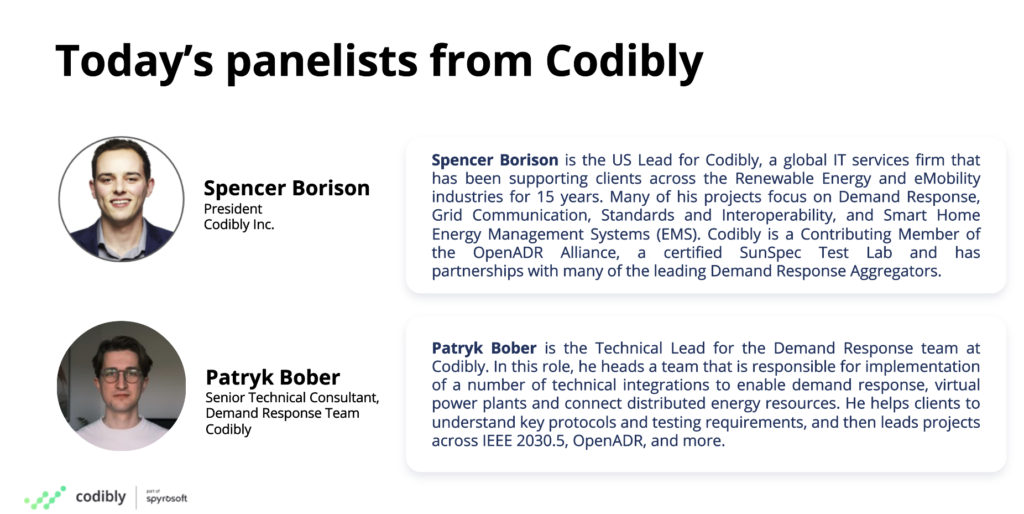
The SunSpec Alliance and Codibly webinar, “Powering Flexible Grids with 2030.5,” delivered a clear look at how IEEE 2030.5 is shaping the future of distributed energy integration. The session opened with a market and policy perspective, outlining how regulatory frameworks and grid modernization efforts are accelerating the need for standardized communication between utilities and distributed energy resources. The speakers positioned 2030.5 as a critical protocol for enabling interoperability at scale, particularly as adoption continues to expand across both domestic and international markets.
The discussion then moved into a technical deep dive, breaking down how 2030.5 is implemented in real-world environments. Presenters walked through both utility and aggregator architectures, showing how systems are designed to translate grid signals into actionable control of assets like solar, storage, and EV charging. A central theme throughout this section was that while the standard defines the communication layer, the majority of effort lies in integration, especially when aligning with utility-specific requirements and operational expectations.
The session concluded with a practical view of deployment, testing, and certification. Speakers emphasized that successful implementations go beyond protocol compliance and require end to end validation across utility environments. The webinar reinforced that interoperability is ultimately about execution, where standardized frameworks must be paired with thoughtful integration strategies to deliver reliable and scalable grid flexibility.
What we covered:
- The role of IEEE 2030.5 in enabling DER communication and grid flexibility
- Key regulatory drivers and market trends shaping adoption
- Real world server and client architecture for utilities, aggregators, and OEMs
- How 2030.5 integrates with other protocols like SunSpec Modbus
- The importance of utility specific requirements and customization
- Testing, certification, and end to end deployment considerations
- Practical insights into scaling interoperability for DER and virtual power plant use cases